
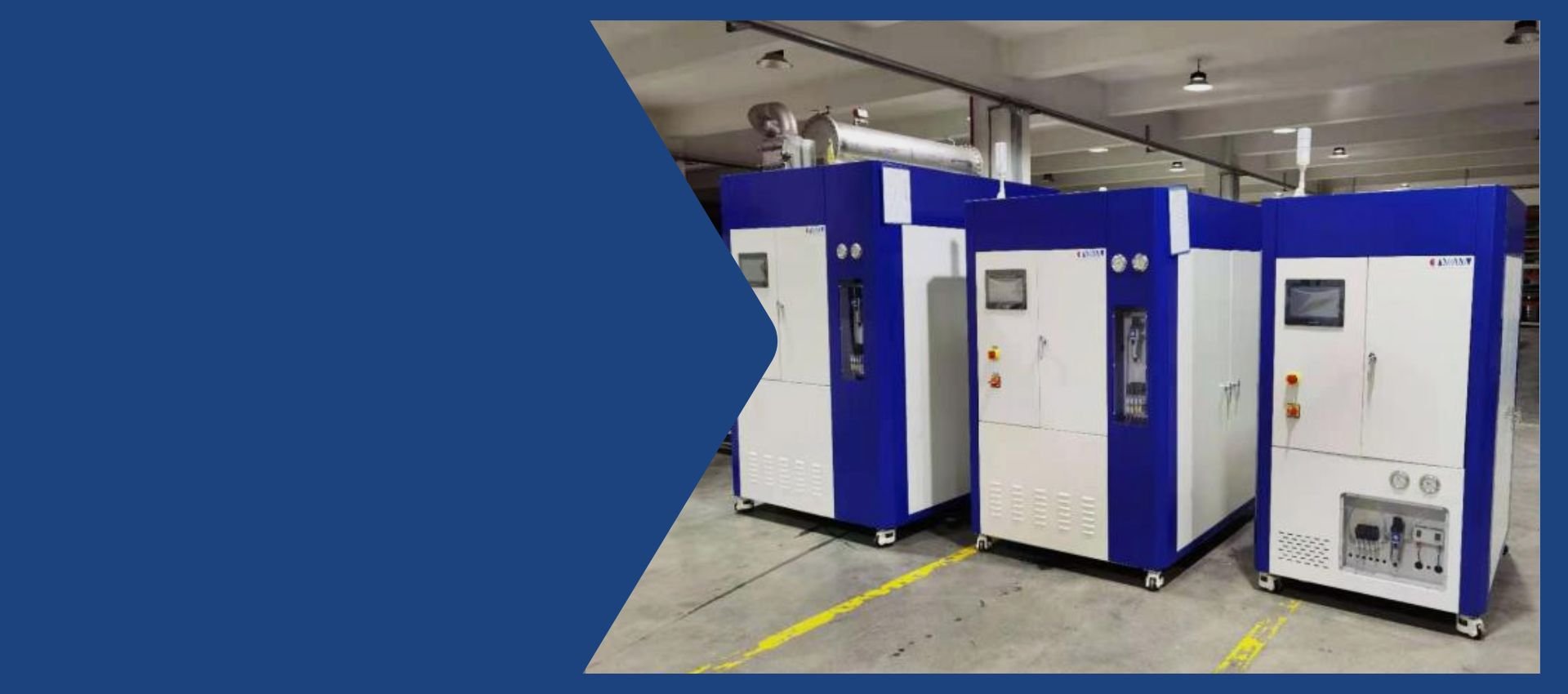
Related Products
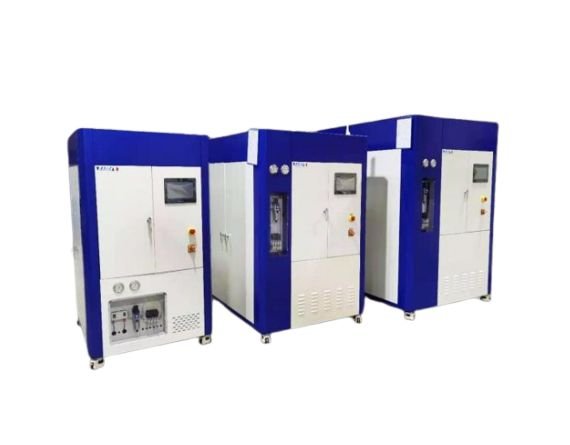
Compact structure, highly automated, no chemical additives required. Excellent effluent quality, high reuse rate, low wastewater discharge, low maintenance cost. An ideal treatment solution for industrial wastewater and high-salt wastewater.
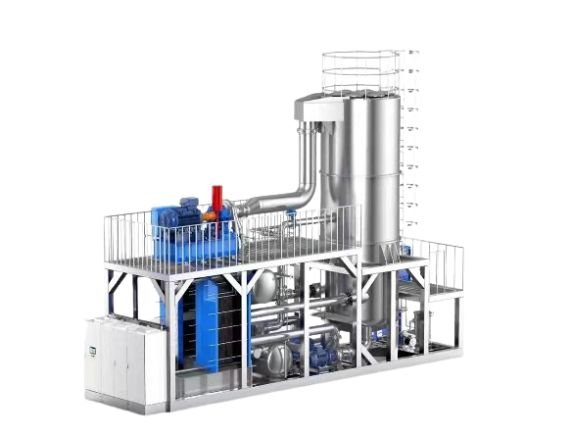
It uses a single screw compressor with an operating temperature rise of 10°C – 50°C. It has a simple structure, no pump, few leakage points, high efficiency and stable operation. It is suitable for chemical solvent recovery and oil concentration.
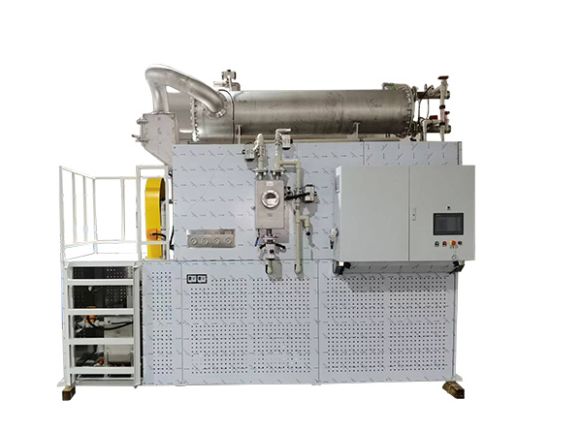
Equipped with retractable scraper, suitable for high viscosity and easy crystallization liquids. Ensure efficient heat transfer, anti-scaling, stable operation. Suitable for chemical high viscosity liquids and pharmaceutical crystallization liquids.
Customize Your MVR Evaporator Today!
The MVR evaporator system adopts a compact design, flexible installation location selection, extremely low unit energy consumption, and excellent condensate separation effect. All equipment has been tested many times in actual combat, and our technical team has specially optimized the design for corrosive and scaling environments. We have an experienced team of chemists and engineers who can tailor the plant design and construction plan according to your project needs to ensure a perfect fit for your application scenario. Installation and maintenance are also simple and convenient.
We offer a variety of models of MVR evaporators, such as 5 m³/d, 30 m³/d, 60 m³/d, 200 m³/d, etc. For more information about the equipment, please send an inquiry to contact us.
MVR Evaporator Applications
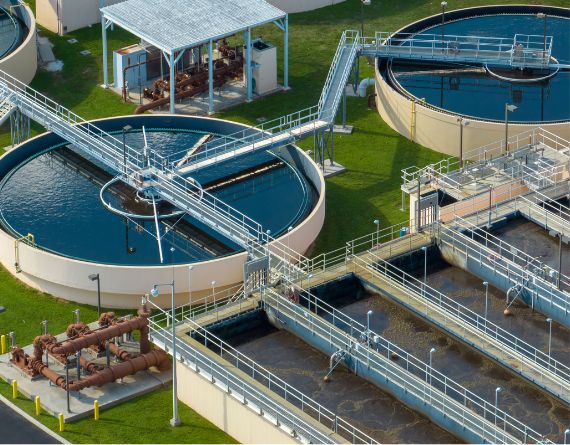
MVR technology can separate salt and pollutants in wastewater to achieve zero wastewater discharge (ZLD). Its concentration rate is as high as 90%-98%, significantly reducing the amount of waste liquid. At the same time, the power consumption per ton of water is as low as 40-60 kWh, helping enterprises save operating costs while meeting environmental protection requirements.
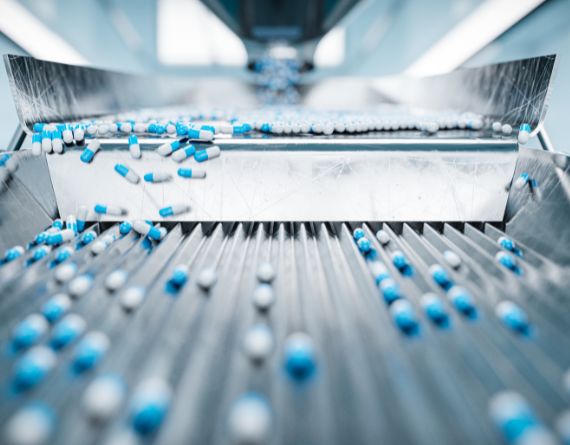
Used for solvent recovery and drug and vitamin concentration, it solves the problem of complex pharmaceutical wastewater composition and difficulty in treatment. By efficiently recovering solvents, it reduces raw material costs while meeting GMP standards to ensure the safety and compliance of drug production.
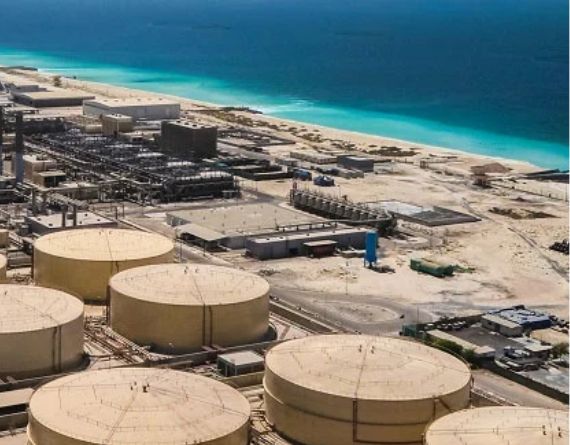
In the field of seawater desalination, MVR evaporator technology can be used for seawater concentration and fresh water extraction. Its low energy consumption operation and efficient anti-scaling design solve the problems of high energy consumption and easy scaling of equipment in traditional seawater desalination, significantly reducing operating costs and extending equipment service life.
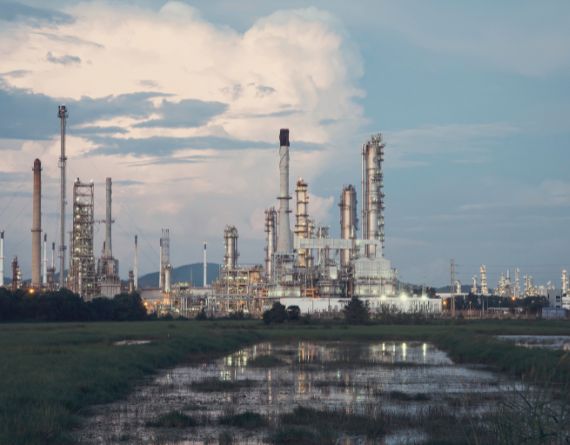
In the chemical industry, high boiling point and high viscosity liquids need to be treated in processes such as chemical evaporation and crystallization and wastewater purification. The MVR system can achieve a temperature rise of 50°C, has strong adaptability, and can achieve zero wastewater discharge and reduce treatment costs.
What is MVR?
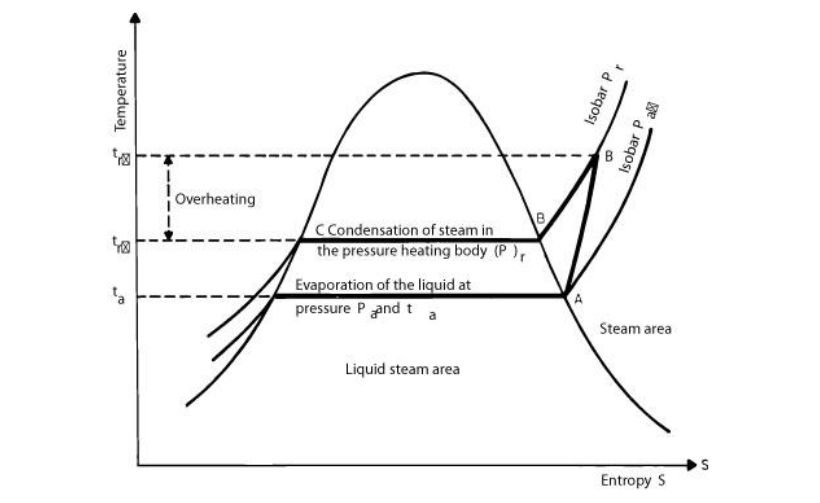
Evaporation is a common method of removing water from a liquid and concentrating it. MVR (Mechanical Vapor Recompression) is an energy-saving evaporation and concentration technology that can reduce evaporation energy consumption by more than 90%. Its core principle is based on energy saving and vapor compression. By recovering and compressing the secondary steam generated during the evaporation process, increasing its temperature and pressure, low-grade steam is converted into high-grade steam and reused as a heat source, thereby greatly reducing dependence on external heat sources. Compared with traditional evaporation technology, MVR significantly reduces energy consumption.
According to Boyle’s law (PV/T=constant), during the steam compression process, the pressure and temperature increase, and the heat energy is reused. The energy lost in the compression process is recovered, thereby achieving an efficient evaporation process. Because this compression process is achieved by a mechanical compressor, it is called MVR.
Working Principle
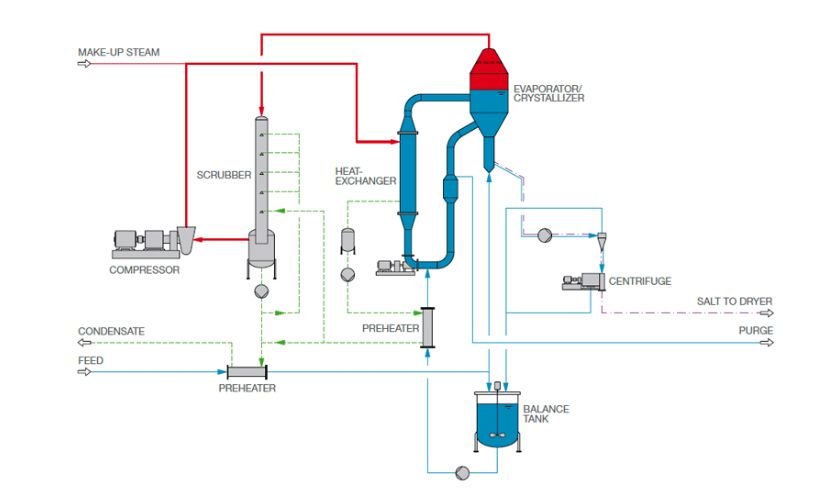
The working principle of the MVR evaporator includes three main processes: evaporation, steam compression and reuse. The material to be processed first enters the evaporator, and at a certain temperature and pressure, the water and other volatile components are evaporated to produce secondary steam. After the secondary steam is separated from the raw liquid, although it has a certain temperature and pressure, as a low-grade steam, it cannot be directly used as a heat source. Traditional evaporators require external steam to provide heat, while MVR technology compresses the secondary steam through a mechanical compressor to increase its temperature and pressure to become high-grade steam.
The compressed high-temperature and high-pressure steam returns to the heating chamber of the evaporator, releases latent heat through the heat transfer surface, and heats the raw liquid. The steam after releasing heat condenses into liquid, which can be discharged from the system or further recycled. This process is circulated continuously to achieve the recycling of secondary steam heat energy.
Composition
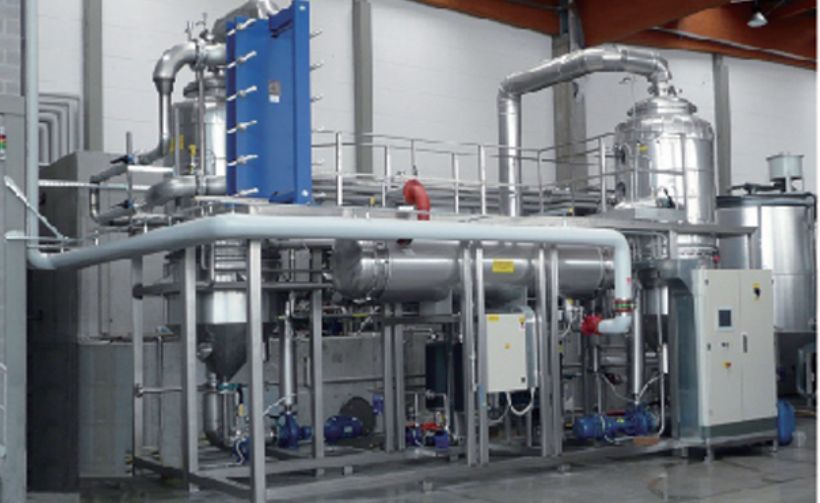
The MVR evaporation system consists of an evaporator, a steam compressor, a separator, a pump, a pipeline, instruments and electrical control components, etc. Depending on the use requirements and working conditions, different types of compressors such as centrifugal compressors and Roots compressors can be used.
- Preheater: Preheat the material entering the evaporator to increase the material temperature.
- Evaporator: The core equipment used to heat the raw liquid and generate secondary steam.
- Mechanical compressor: The core component of MVR, is used to compress the secondary steam and increase its temperature and pressure.
- Heating chamber: Use compressed high-grade steam to heat the raw liquid.
- Condenser: Cool the unrecycled secondary steam into liquid and discharge it from the system.
- Control system: Automatically control the entire evaporation process, monitor and adjust the operating parameters in real-time to ensure stable and efficient operation of the system.
Technology Innovation
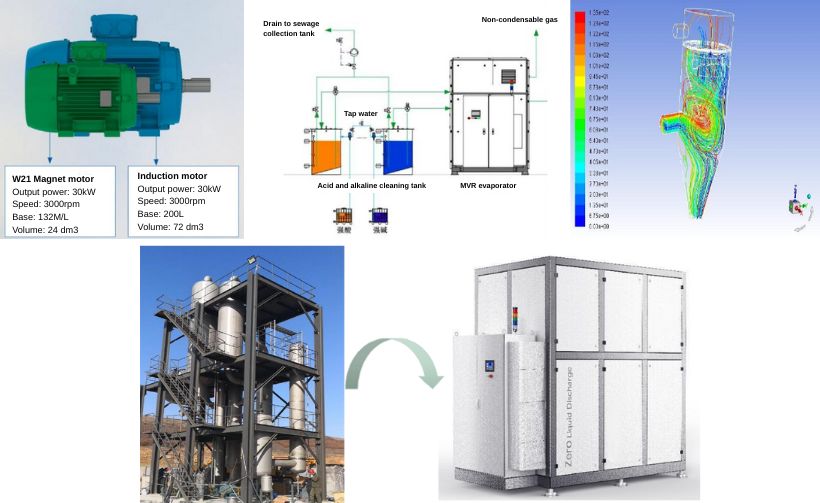
- Compact structural design: It adopts modular design, all components are highly integrated, and the volume is 60%-70% smaller than that of traditional evaporators. While ensuring functionality, the equipment is more compact and refined, with a high degree of automation and easy installation and maintenance.
- Compressor motor: Equipped with WEG’s latest permanent magnet variable frequency motor (IE4), it has high power density, small size, and the highest energy efficiency in the industry, which greatly reduces operating energy consumption.
- CIP cleaning system: The fully automatic cleaning system effectively reduces scaling problems. Customized cleaning agents can remove 99% of deposits, ensuring long-term and efficient operation of the equipment.
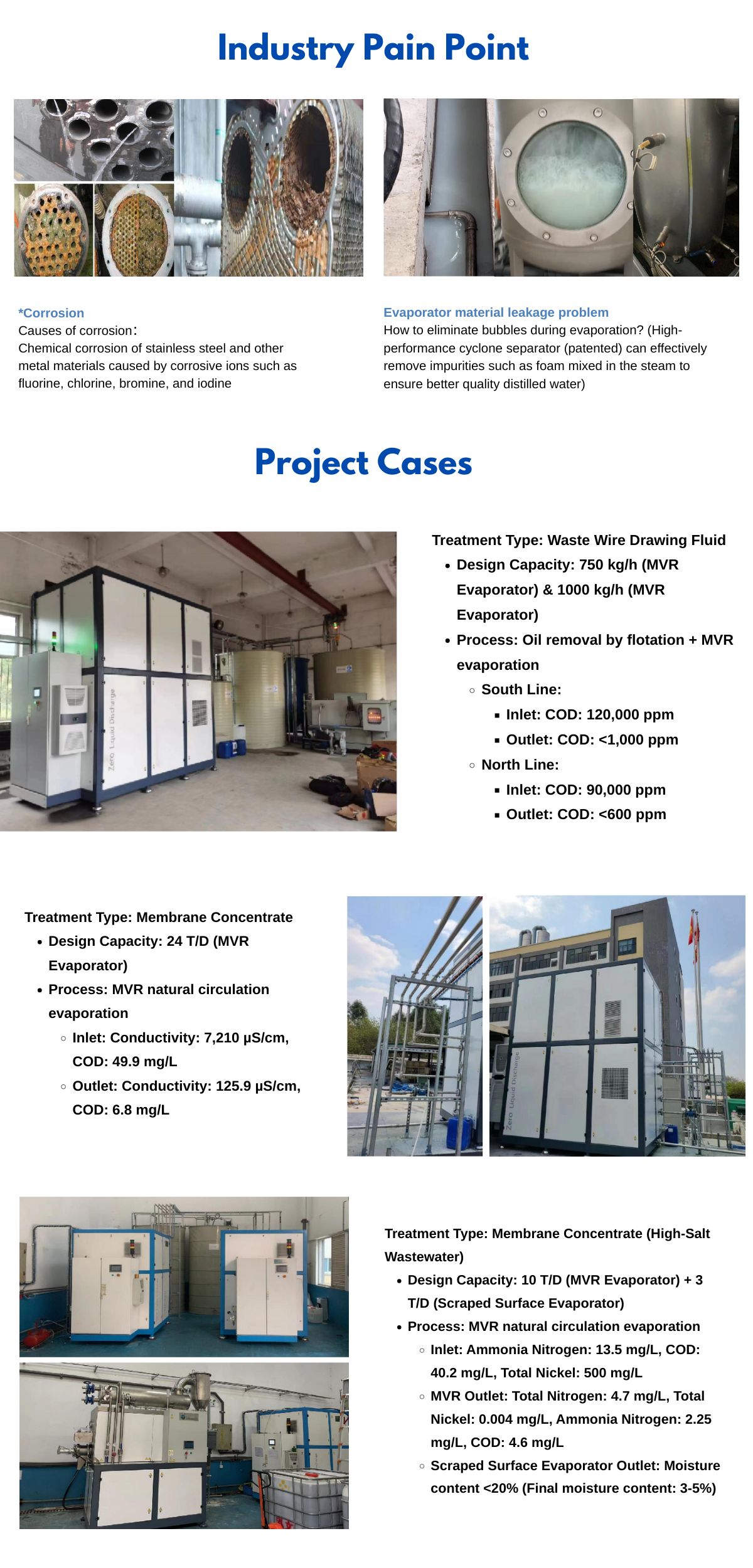
- High-efficiency cyclone separator (patent): The patented cyclone separator is used to efficiently remove foam and impurities in the steam, ensuring the high quality of distilled water and improving the overall stability of the system.
How to Start Your Order
- Share Your Requirements
Application, capacity, material properties, automation, other requirement. - Receive Evaporator Recommendation
We’ll suggest suitable models or custom solutions based on your needs. - Confirm Selection
Approve the recommended model and finalize order details. - Production & Quality Check
Your evaporator is manufactured and rigorously tested for reliability. - Shipping & Delivery
We arrange shipment and share delivery details after final payment.
- Case Studies
- Company Strength
- Videos
- Catalog
 Screw MVR Evaporator Scraper MVR Evaporator Low-Temperature MVR Evaporator
Why Choose Us
NEWater has nearly 20 years of experience in the water treatment industry, focusing on evaporation, crystallization, sludge management and corrosion control, and has accumulated deep expertise.
As a leading MVR evaporator manufacturer, we offer the best quality, service and price. A variety of evaporators are available to meet various wastewater treatment needs and ensure efficient and stable treatment results. Flexible equipment capacity, single unit processing capacity of 10 to 200m³/hour. No external steam or cooling water is required for the entire operation process, which significantly reduces project investment costs compared to traditional multi-effect evaporation technology.


This low-temperature evaporator is fantastic! After comparing several suppliers, we chose NEWater, and it was definitely the right decision. The equipment and accessories were well-protected, and the unit looks clean and well-made with high-quality materials. The size is perfect for our needs. It’s highly efficient, energy-saving, and has been running smoothly since installation, saving us a lot on costs. The NEWater team also provided excellent technical support and guidance throughout the process. Highly recommended!

With an annual capacity of 600 – 27,000m³, it meets various scale demands, suitable for different industrial scenarios from small to large operations.

A touch screen combined with an intelligent system ensures smart and convenient control. Simple to operate and manage, it features full automation for unattended running, offering stable and reliable performance.

Heat circulation enables low water power consumption at 40 kWh per ton. The compressor has 92% isentropic efficiency, 75% effective efficiency, and a COP of 12. 45% less energy than the Roots type, with 60 kWh per ton. Liquid injection compression, 3 kPaA vacuum, skips the vacuum pump and speeds up the heating.

A concentration ratio of 90% – 98% cuts subsequent processing volume and cost. Without vacuum and circulation pumps, it has few leakage points, high efficiency, and low maintenance. The single-screw compressor, with a 10°C – 50°C temperature rise, suits high-boiling solutions and runs stably at saturation.
FAQs
- High-salt wastewater
- Chemical wastewater
- Pharmaceutical wastewater
- Food processing wastewater
MVR (Mechanical Vapor Recompression):
Uses a mechanical compressor to reuse secondary steam, reducing energy consumption by up to 90%. Ideal for high-efficiency, low-energy applications.
TVR (Thermal Vapor Recompression):
Uses a thermal compressor (steam jet) to reuse steam, requiring external steam as a driving force. Suitable for applications where steam is readily available.
 EN
EN  RU
RU  ES
ES  DE
DE  AR
AR  TH
TH  PT
PT  FR
FR  IT
IT  KO
KO  JA
JA