
Outdoor activities prioritize lightweight and portable gear, yet drinking water remains essential and must be consumed continuously. Bottled water is heavy and bulky, making it impractical to carry in large quantities, while water treatment devices are often costly or cumbersome.
As a result, securing a stable and safe drinking water supply—anytime and anywhere—remains a key challenge outdoors. This article offers simple, beginner-friendly guidance and practical solutions for all scenarios, from solo trips to group expeditions.

What is Drinkable Water?
Drinking water, also known as potable water, refers to water that is safe to drink and does not pose a health risk to humans. Unlike centralized urban water supply systems, there are no strict, uniform standards for “directly drinkable water” in outdoor settings. It is generally recommended to refer to the concept of Potable Water and the basic requirements for drinking water set by the World Health Organization (WHO) – that is, water that, after proper treatment, is sufficiently safe at both the microbiological and chemical levels to be consumed directly.

The following three key aspects can help determine whether water meets the basic requirements for direct consumption:
1) Absence of pathogenic microorganisms (most important)
This is the most crucial criterion. Outdoor water sources often contain bacteria, parasites, protozoa, and viruses that are invisible to the naked eye, such as E. coli, cholera bacteria, Cryptosporidium, and hepatitis A virus.
2) Chemical safety
This includes heavy metals (such as lead, mercury, and arsenic) and pesticides and industrial pollutants that pose risks to human health.
3) Mineral and salt content within safe limits
It is generally recommended that the total dissolved solids (TDS) in the water be kept at ≤500 mg/L (WHO recommended value).
What are the Sources of Outdoor Water? Why do They Need to be Treated?
After defining what constitutes potable water, it is important to understand common outdoor water sources and their risks. This explains why most outdoor water must be treated before it is safe to drink.
Common outdoor water sources include rivers, streams, lakes, springs, rainwater, seawater, brackish water, and glacial meltwater.

Streams, Rivers, and Lakes:
These sources often contain sediment, suspended solids, high turbidity, and invisible biological and chemical risks. River water typically carries large amounts of suspended particles and bacteria, while lake water may experience algal blooms that can release harmful toxins. Water quality in surface waters fluctuates significantly and is easily affected by animal activity and human pollution, such as fecal contamination, agricultural runoff, industrial discharge, and untreated sewage. Drinking untreated surface water can lead to gastrointestinal illness, infections, or, in severe cases, heavy metal poisoning.
Seawater and Brackish Water:
The primary concern is high salt and dissolved mineral content. Direct or long-term consumption can stress the kidneys, disrupt electrolyte balance, and affect blood pressure. These water sources must be desalinated before they are safe for drinking.
Rainwater:
Rainwater can absorb airborne pollutants during precipitation and may become contaminated during collection or storage. Untreated rainwater may have low pH and microbial risks, making it unsafe for direct consumption.
Glacial Water and Meltwater:
Although generally less polluted, glacial meltwater may still contain trace bacteria or heavy metals from atmospheric deposition. Its low temperature can also increase the risk of hypothermia if consumed directly.

In general, glacial meltwater and snowmelt are relatively cleaner, followed by rainwater and fast-flowing rivers in remote areas. However, “relatively clean” does not mean safe to drink. Without microbiological testing, water safety can never be guaranteed.
The safest and most practical rule is simple: never drink untreated outdoor water, even if it appears clear, and the risk is higher when the water is turbid. In 2024, a group of hikers contracted giardiasis after drinking untreated stream water, with symptoms appearing 1–2 weeks later and severely disrupting their trip.
For these reasons, filtration, disinfection, or purification is essential to convert natural water sources into potable water during outdoor activities, travel, or emergency situations.
5 Common Ways of Purifying Outdoor Water
In outdoor environments, you can initially assess water sources based on physical characteristics such as turbidity, sediment, suspended solids, odor, and color. If conditions permit, you can also use a portable TDS meter; a reading of ≤500 mg/L usually indicates that the mineral content is not significantly excessive.
Here are 5 common methods for purifying water outdoors:
1) Boiling
As the simplest and most convenient water treatment method for outdoor use, boiling is extremely low-cost, requiring only fuel and a container. Boiling the water (after settling if necessary) effectively inactivates approximately 99% of bacteria, viruses, and parasites, making it suitable for treating the main microbial risks in surface water from rivers and lakes.
Its limitations include the inability to remove chemical pollutants and TDS, and it requires a certain water quality, only suitable for freshwater without significant oil contamination or highly toxic pollutants. It also has a limited processing capacity, only suitable for short-distance hiking, single-person or small team short-term emergency use. In high-altitude or cold environments, efficiency decreases, and the time and energy costs of obtaining purified water are higher.

2) Chemical Tablets
This method is suitable for lightweight outdoor use and emergency backup. Chemical disinfection tablets have the advantages of being small, lightweight, easy to carry, and inexpensive; common products cost about $1 per tablet on e-commerce platforms. They are easy to use; simply put the tablet into a container of water and let it sit for about 30 minutes to 2 hours to effectively inactivate most bacteria and viruses, suitable for single-person or small team short-distance hiking and emergency use.
Limitations include the inability to remove chemical pollutants, heavy metals, and dissolved salts (TDS), and limited effectiveness against parasites. The treated water has a poor taste, and the source water usually needs to be pre-filtered or settled for clarification. It is recommended for relatively clear or pre-filtered river water, lake water, or rainwater.

3) Gravity Filters / Straw Filters
These are low-cost and cost-effective devices for outdoor use. Straw-type and gravity-fed bag/bucket filters are very lightweight, usually weighing only tens of grams, and are easy to use, requiring no electricity. Purified water can be obtained through suction, squeezing, or gravity. The price range is approximately USD 20–200.
Its filtration accuracy is typically in the 0.1 μm range, mechanically blocking most suspended solids, bacteria, and parasites.
It is suitable for treating freshwater sources with low TDS, for short-term use by individuals or small teams during hiking, travel, or emergencies. Pre-filtration is required for highly turbid water to prevent clogging. Limitations include the inability to remove dissolved chemicals and salts, and limited effectiveness against viruses.

4) UF Filters
The advantage of outdoor ultrafiltration (UF) filters is their high filtration accuracy, typically in the 0.01–0.1 μm range, reliably removing suspended solids, bacteria, and parasites while retaining minerals in the water. The device requires no electricity, relying on water pressure, making it suitable for remote off-grid areas, group camping, rural teaching, and light outdoor work. The treated water has a good taste. For frequent group travel, the long-term cost is usually lower than continuously buying bottled water.
Its limitations are that it is ineffective against dissolved chemical pollutants and cannot remove heavy metals and soluble salts. Therefore, it is only suitable for freshwater sources with low to medium TDS, and not suitable for high TDS scenarios such as seawater or brackish water.
In addition, UF membranes have limited effectiveness against viruses, and long-term direct consumption still carries risks. The filter element is prone to clogging and requires regular flushing and maintenance, resulting in a higher overall cost than straw filters or chemical disinfection tablets.

5) Portable RO System
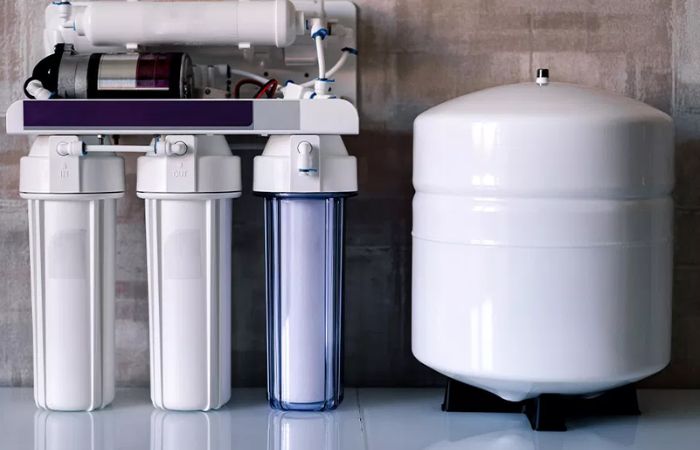
This is currently the safest way to obtain drinking water outdoors. Portable RO water filters use a multi-stage process (mesh filter + PP + CTO + RO) to progressively remove sediment, organic contaminants, odors, dissolved salts, heavy metals, and microorganisms.
The treated water has significantly reduced TDS, no noticeable odor, and usually meets drinking water standards, making it safe for direct consumption. Some devices support solar or off-grid power, making them suitable for a wide range of applications, such as coastal areas, islands, boats, rescue operations, professional expeditions, long-distance road trips, and multi-day group activities.
The limitations of this method are that, compared to the aforementioned methods, portable RO units are significantly larger, heavier, more expensive, and consume more energy. The system requires regular replacement of RO membranes and pre-treatment filters, resulting in high maintenance costs, and also has a high wastewater ratio (typically between approximately 3:1 and 1:1, depending on the water source and system design).
Therefore, mobile RO systems are more suitable for scenarios requiring the treatment of seawater, brackish water, or providing long-term safe drinking water for multiple people; for ordinary personal hiking or short-term camping, the necessity of such a long-term investment is lower.

NEWater Solutions for Outdoor Surface Water Treatment
NEWater provides lightweight and efficient solutions for outdoor water needs, ensuring safe and healthy water production while maintaining low weight, portability, and a compact, space-saving design. These solutions are suitable for short-term or long-term, individual or group access to drinking water.
Backpacking Water Filter (Lightweight, No Power Needed)
This backpacking water filter is one of our top recommended products for outdoor travel and a frequently inquired-about item. The device features a portable case design with a sturdy, waterproof, and dustproof shell. Weighing approximately 1 kg and equipped with a shoulder strap, it can be easily carried by one person.

The backpacking water filter has a built-in 2400 mAh battery and a USB charging port, supporting AC/DC power and solar systems, making it suitable for off-grid areas. This device is suitable for small-scale water supply needs, such as hiking, camping, wilderness survival, disaster relief, personal hydration, outdoor travel and cycling, and small group water use scenarios.
To use, simply connect the inlet and outlet, and start the device with a single button press to obtain water. The Backpack water filter contains an RO membrane and an activated carbon filter, capable of treating river water, lake water, spring water, and other water sources, significantly reducing bacteria, viruses, and odors in the water. The produced water meets WHO drinking water guidelines, with a standard water production rate of ≥25 L/h, and flow rate customization is available.
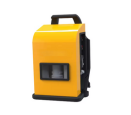
Lightweight Backpacking Water Filter
Portable RO/UF Water Purification System (Solar Optional)
Our portable water purifier offers two technology options: UF and RO. Both systems can produce potable water, provided the incoming water quality is suitable. The portable RO water purifier is more suitable for treating turbid water, lake water, river water, and seawater, providing more stable and safer water quality, but at a relatively higher cost. The portable UF water purifier is recommended for freshwater sources with low turbidity and is not suitable for treating seawater or high TDS water.
Both systems integrate activated carbon filters and filtration membrane components into a mobile carrying case for easy movement and transportation. The operation process is simple: unfold the solar panel → connect the water source → turn on the device → wait for purification → collect water. The system supports battery/AC/DC/solar power supply, with optional solar panels, suitable for outdoor travel and cycling, family or group camping, rescue teams, off-grid scenarios, RVs, disaster relief, and flood management applications.
Portable RO water purifier
- Flow rate range: 25–90 LPH, plug and play
- Weight range: 18–37 kg
- Process:mesh filter + PP + CTO + RO
- Compatible with mains power/DC/solar power, can store electricity and operate even at night without sunlight
- Device casing: ABS material + IP65 waterproof rating
- Core filtration element: 0.0001 μm reverse osmosis membrane
- Desalination rate: ≥98%
- Bacteria and virus removal rate: ≥99.99%
- Effectively removes most heavy metals
- Produced water meets WHO drinking water guidelines
For highly turbid water sources, pre-sedimentation or pre-treatment is recommended to extend the service life of the filter elements and RO membrane.
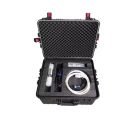
Suitcase Portable UF Water Purifier
Portable UF water purifier
- Suitable for turbid freshwater and slightly brackish water
- Lightweight and compact, easy to carry
- Weight range: 16–35 kg
- Ready to use with water and power connection
- Built-in 24V lithium battery for 4–6 hours of emergency backup power
- System structure: 0.01 μm ultrafiltration membrane + post-UV sterilization
- Effectively removes bacteria and protozoa, virus removal relies on UV sterilization
- Limited ability to remove heavy metals and soluble salts
- Multi-stage filtration structure, SGS certified
- Produced water meets WHO drinking water guidelines
- Water production capacity: 150–500 LPH (optional)
- Casing: ABS material + IP65 waterproof rating, suitable for outdoor use
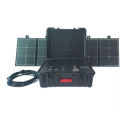
Suitcase Portable RO Water Purifier
Which is the Best Way to Purifiery Outdoor Water?
Outdoor Water Purification Methods Comparison
| Comparison Criteria | Boiling | Chemical Tablets | Gravity / Straw Filters | Portable UF System (NEWater) | Portable RO System (NEWater) |
| Typical Use Case | Emergency Backup | Emergency Backup | Hiking / Short Trips | Group Camping / Off-Grid Water | Island / Coastal / Long-Term Outdoor |
| Target Users | Solo Traveler | Solo Traveler | Solo / Small Group | Small–Medium Group | Medium–Large Group / Pro Users |
| Water Source Compatibility | Freshwater | Freshwater | Low-TDS Freshwater | Freshwater / Turbid Water | Almost All Water Sources |
| Treat Seawater? | ✕ | ✕ | ✕ | ✕ | ✓ |
| Remove Sediment / Turbidity? | △ | ✕ | ✓ | ✓ | ✓ |
| Remove Bacteria / Parasites? | ✓ | ✓ | ✓ | ✓ | ✓ |
| Remove Viruses? | ✓ | ✓ | Limited | Limited (UV-Dependent) | ✓ |
| Remove Heavy Metals? | ✕ | ✕ | ✕ | Limited | ✓ |
| Remove Dissolved Salts (TDS)? | ✕ | ✕ | ✕ | ✕ | ✓ |
| Remove Chemical Contaminants? | ✕ | ✕ | ✕ | ✕ | ✓ |
| Water Quality Stability | Low | Low | Medium | High (Freshwater Only) | Highest |
| Single-Treatment Capacity | Low | Low | Low–Medium | Medium–High | Medium |
| Requires Power? | ✕ | ✕ | ✕ | Optional | Optional |
| Maintenance & Operation | Simple but Time-Consuming | Simple | Prone to Clogging | Requires Flushing | Membrane Replacement Needed |
| Long-Term Cost | High (Fuel) | High (Consumables) | Medium | Low | Medium |
| Suitable for Long-Term Supply? | ✕ | ✕ | ✕ | ✓ | ✓✓ |
| Overall Safety Rating | ★★☆☆☆ | ★★☆☆☆ | ★★★☆☆ | ★★★★☆ | ★★★★★ |
Conclusion
The safety, cleanliness, accessibility, and convenience of outdoor water are critical considerations. Any outdoor water source must be treated before drinking; natural water should never be consumed directly. For users with long-term hiking, travel, or camping needs, outdoor water purification should go beyond temporary or emergency solutions and rely on professional purification equipment.
When selecting an outdoor water filter, consider the usage scenario, water source, and required output, and refer to the methods and recommendations outlined in this article. Solutions such as backpack-style filters or portable water filters can be chosen accordingly.
For equipment specifications, pricing, or selection guidance, feel free to contact us. Whether you are an outdoor enthusiast or an emergency or project procurement professional, our solutions are designed to meet your water needs.
 EN
EN  RU
RU  ES
ES  DE
DE  AR
AR  TH
TH  PT
PT  FR
FR  IT
IT  KO
KO  JA
JA